MED0001151603 - This website contains imagery which is only suitable for audiences 18+. All surgery contains risks, read more here

Our results
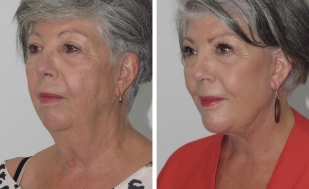
Before After
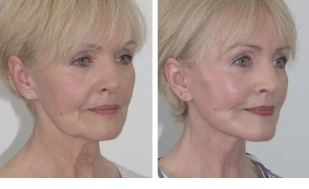
Before After
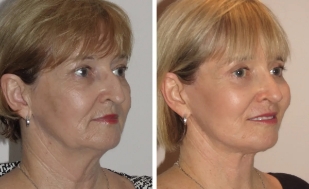
Before After
Before After
Disclaimer: The outcomes shown are only relevant for this patient and do not necessarily reflect the results other patients may experience, as results may vary due to many factors, including the individual’s genetics, diet and exercise. Some images may have the patient’s tattoos, jewellery or other identifiable items blurred to protect patient identities.
Why Choose Dr Jeremy Hunt
Dr Hunt’s philosophy for Facelift is to use the most appropriate techniques and practices in order to deliver the desired result for each individual patient.
Avoiding poor results is simply a question of precise and expert assessment of each individual patient’s needs, appropriate choice of the correct procedure for that patient, and then delivery of technique.
Registered Specialist Plastic Surgeon
Dr Jeremy Hunt M.B.B.S (Syd) F.R.A.C.S. (MED0001151603) is a registered specialist plastic surgeon.
With over 20 years’ experience working with thousands of patients, Dr Hunt takes a well-informed and sincere approach to his craft. A Fellow of the Royal Australasian College of Surgeons and member of the Australian Society of Plastic Surgery, Dr Hunt has spent time with and learnt from a number of plastic surgeons around the world throughout his career.
Understanding
The visible changes associated with ageing are a net result of anatomical alterations that occur in all layers of the face. This includes bone loss, loss of skin elasticity, and loss of structure of our facial soft tissue. There are a variety of lifestyle factors that can contribute to your skin quality such as being overweight, sun damage, and smoking.
Over time, our understanding of the complex facial structure has grown, as have our surgical abilities to reverse them. Dr Jeremy Hunt offers a range of Facelift (Rhytidectomy) procedures. Using techniques such as the Deep Plane Facelift (Rhytidectomy), Dr Hunt avoids unnecessary tightening of the facial skin that is commonly used to typify older methods.
The different
Candidates for a Mini Facelift (Rhytidectomy) are those who are younger and display minimal photoaging and wrinkles and have moderate elasticity of their facial tissues.
This Facelift (Rhytidectomy) procedure allows Dr Hunt to address the signs of ageing around the eyes, remove excess skin around the cheeks and neck, and frown lines around the mouth.
Why Choose Dr Jeremy Hunt
Surgical face procedures are one of the first techniques devised by plastic surgeons. And so, many people think that they may be outdated, with similar results being able to be achieved using conservative or non-surgical treatments.
Although there are a variety of treatments out there to treat signs of ageing, many patients report more natural and longer-lasting results following Facelift (Rhytidectomy) surgery.
Everybody ages at a different rate, experiencing the signs of ageing differently. Although commonly performed in those between the ages of 40 and 65, you may find that you may not be a good candidate until you reach the late 60s or 70s. Likewise, those who smoke or have chronic illnesses that affect facial musculature may find themselves eligible at a younger age.
If you’ve seen somebody completely transformed and looking “plastic”, it usually means that either surgery has gone wrong, or they have opted to go for their desired look. Advancements in medical technology allow surgeons to alter your face by providing aesthetically pleasing natural results. Dr Hunt’s philosophy is not the change who you are are and the way you look.
Surgeons are able to place incisions within the natural contours of the face and neck to help provide minimal visible scarring.
Each Facelift (Rhytidectomy) is performed differently depending on the patient’s characteristics. You’re not going to wake up looking like somebody else. You will, however, receive a completely individualised and unique treatment plan.
Facelift (Rhytidectomy)
Facelift (Rhytidectomy) surgery is performed by following a series of steps. Although a cosmetic surgery, Facelift (Rhytidectomy) surgery is still somewhat invasive, and so requires the use of an appropriate treatment room and anaesthesia.
Step 1
Prior to your surgery, and assuming that all preoperative checks have been completed, you will be met by an anesthetist who will optimise a medication regime to put you at ease throughout your surgery. Facial surgery typically requires the use of general anaesthesia, meaning that you will be put to sleep.
Step 2
Once you are under anaesthesia, your surgeon will commence your Facelift (Rhytidectomy) surgery by making multiple small incisions. The depth and size of these incisions vary depending on the degree of outcome which you are expecting and the Facelift (Rhytidectomy) procedure you have decided to undergo.
Traditional incisions begin at the hairline around the temples, continue around the natural contour behind the ear, and sometimes under your chin (if you are having a Neck Lift).
Step 3
Once the incisions are complete, Dr, Hunt will identify the superficial muscular aponeurotic system (SMAS), which is the underlying musculature of the face that is lifted. Going under this SMAS layer is entering the “ deep plane” and this is where the SMAS layer, fat pads and muscle are lifted from. This upward and outwards movement aims to accentuate your jawline, address jowls and deep marionette lines at the corner of the mouth, and deep nasolabial folds that run from the base of the nose down past the corner of the mouth. The cheek fat pad will be elevated on the cheek bone, aiming to achieve an overall natural-looking definition to your face.
The tightening is done on the deeper layers of the skin so as not to create an obvious “skin-tight” look.
Step 4
Once the skin, and depending on your procedure, the facial muscles have been tightening, Dr Hunt will secure it in place, removing excess skin during the process. A drain may be placed to prevent the build-up of fluid and reduce pressure on the incision sites. The incisions will then be sutured shut.